Morning Flood Risks Highlighted Near Florida Aquarium in Downtown Tampa
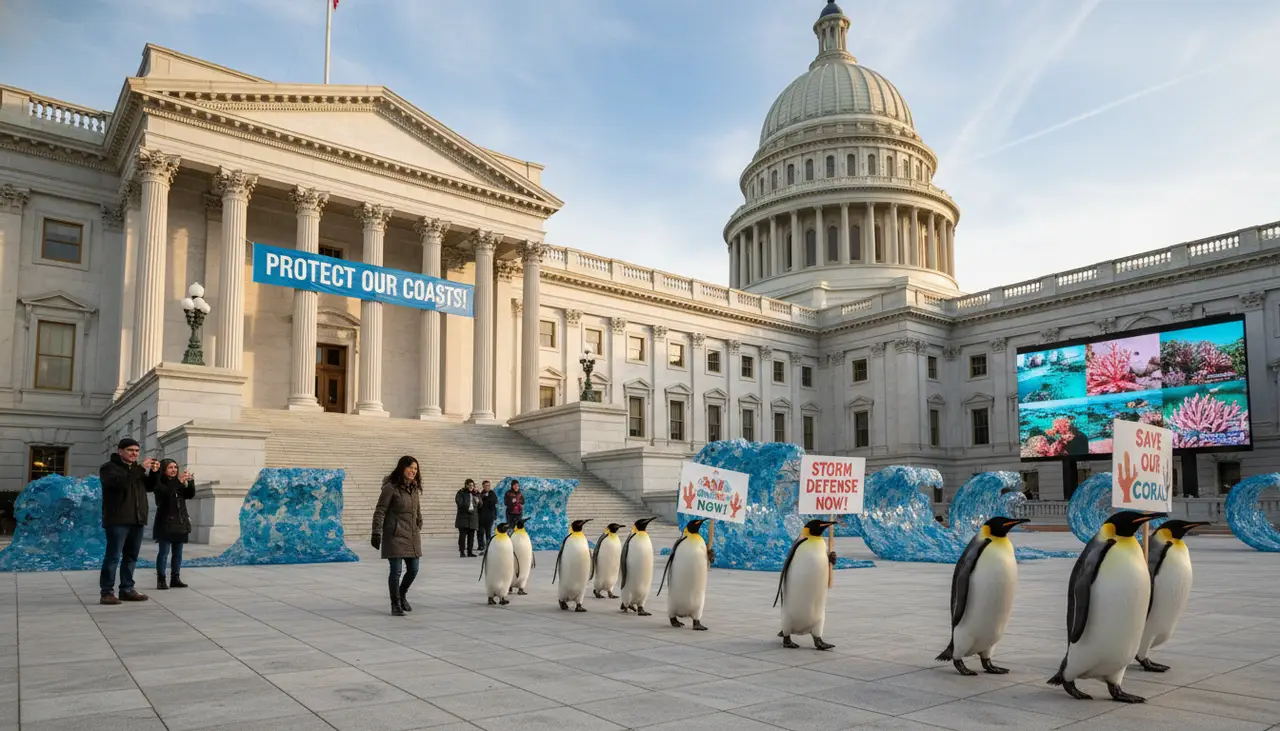
At 8:30 a.m. on Channelside Drive, just steps from the Florida Aquarium in downtown Tampa, a small group gathered near the intersection with West Whiting Street. The usually bustling morning traffic slowed as four African penguins named Archi, Enzi, Nuru, and Pebbles were carefully escorted through the area. The unusual sight wasn’t just for show—it was part of a push to spotlight urgent storm and flood protection needs for Tampa’s waterfront neighborhoods.
Inside the Florida State Capitol in Tallahassee, Representative Tyler Sirois, alongside Senator Danny Burgess and Representative Michael Owen, brought these penguins to the Capitol to emphasize the stakes of ongoing hurricane threats and the need for increased funding for local protections. The spotlight is on the $15 million storm and flood protection project proposed in the 2025 budget, specifically targeting flood barrier walls near the Florida Aquarium and other critical areas along Tampa’s downtown waterfront.
What Happened: Funding Push to Protect Tampa’s Waterfront From Hurricanes
In the wake of recent hurricanes Helene and Milton, which caused severe flooding risks to downtown Tampa, the Florida Aquarium’s doors faced floodwaters that threatened the facility and surrounding neighborhoods. The aquarium, home to critically endangered African penguins, has become a symbol of the vulnerability of Tampa’s marine ecosystems and coastal infrastructure.
Rep. Sirois and local officials are urging Governor DeSantis and the Florida Department of Environmental Protection to approve the 2026-2027 Local Funding Initiative Request. This request includes $1 million earmarked for flood barrier walls and other storm protection measures designed to shield downtown Tampa, including the area around Channelside Drive and the aquarium itself.
These efforts also support coral reef restoration, with tens of thousands of new corals produced to help rebuild critical habitats damaged by storms. But without immediate action, the risk of repeated flooding and damage remains high.
Why This Matters Locally: Your Home, Commute, and Wallet Are on the Line
Floodwaters reaching downtown Tampa do not just threaten local landmarks—they put your household and daily life at risk. Flooding on Channelside Drive and nearby streets can cause severe traffic delays, disrupt commutes, and damage homes and businesses.
Ignoring these risks means facing costly repairs, insurance claims, and potential displacement. Flood damage can lead to mold, structural issues, and long-term health hazards. Stress levels spike when families have to evacuate or deal with the aftermath of storm damage, with many residents left scrambling for emergency services.
The financial impact is immediate and real. Without proper flood barriers, property values can drop, insurance premiums rise, and local businesses struggle to recover from repeated storm damage. This affects Tampa’s economy and the quality of life in neighborhoods around downtown.
If This Happens to You: What to Do Immediately
- First, stay informed by monitoring local weather alerts and updates from Tampa’s emergency management.
- Secure your property by moving valuables to higher ground and sealing doors and windows where possible.
- Prepare an evacuation plan for your household—know your nearest shelters and routes.
- Turn off electricity and gas if flooding is imminent to prevent fires or electrocution.
- Document any damage with photos and videos before cleanup begins for insurance purposes.
- Contact your insurance company promptly to report damage and start claims.
- Do not attempt major repairs yourself—wait for professional assessments to avoid further damage or safety risks.
When Local Professional Help Becomes Necessary
Flood damage often requires expert intervention. If your home or business experiences structural damage, you need to contact licensed contractors immediately to assess and repair the property safely.
Legal help becomes necessary if insurance claims are denied or delayed, or if there are disputes over property damage responsibilities. A local attorney experienced in storm-related cases can protect your rights and navigate complex insurance policies.
Professional planners and engineers should be consulted if you live in flood-prone zones and want to implement long-term mitigation strategies, such as elevating your property or installing flood barriers.
Cleanup and mold remediation require specialized services to avoid health hazards. Attempting to handle these yourself can worsen the problem and increase costs later.
Closing Local Context: Tampa’s Waterfront Faces a Critical Crossroads
Tampa residents pass through this area daily—whether commuting along Channelside Drive, visiting the Florida Aquarium, or working in downtown offices. The ongoing threat of flooding here is not abstract; it’s a direct risk to the infrastructure and livelihoods that define our city.
With hurricanes like Helene and Milton still fresh in memory, the failure to secure storm protection funding could mean more frequent and severe flood events. The push by Rep. Sirois and local leaders to secure the 2025 budget funding is a critical step. But time is running out.
Every Tampa household near downtown should take this warning seriously. The decisions made in Tallahassee in the coming months will shape how well our city withstands future storms—and how safe your home and community will be.
Where This Is Happening in Tampa
The focus is on the downtown Tampa area around the Florida Aquarium, located on Channelside Drive near West Whiting Street. This area is a hub for residents and visitors alike, connecting neighborhoods such as the Channel District and the Tampa Bay History Center nearby.
Channelside Drive is a major corridor for commuters heading to and from downtown Tampa, as well as a popular route for tourists visiting the aquarium and waterfront parks. Flooding here disrupts traffic flow on key streets and impacts businesses and residences in the immediate vicinity.
Local residents who live or work near these streets should be aware of the ongoing storm protection initiatives and the urgent need to support infrastructure improvements to safeguard this vital part of Tampa’s waterfront.