Early Evening on E. Memorial Blvd: Smoke Rises Over Lakeland’s Lake Parker Neighborhood
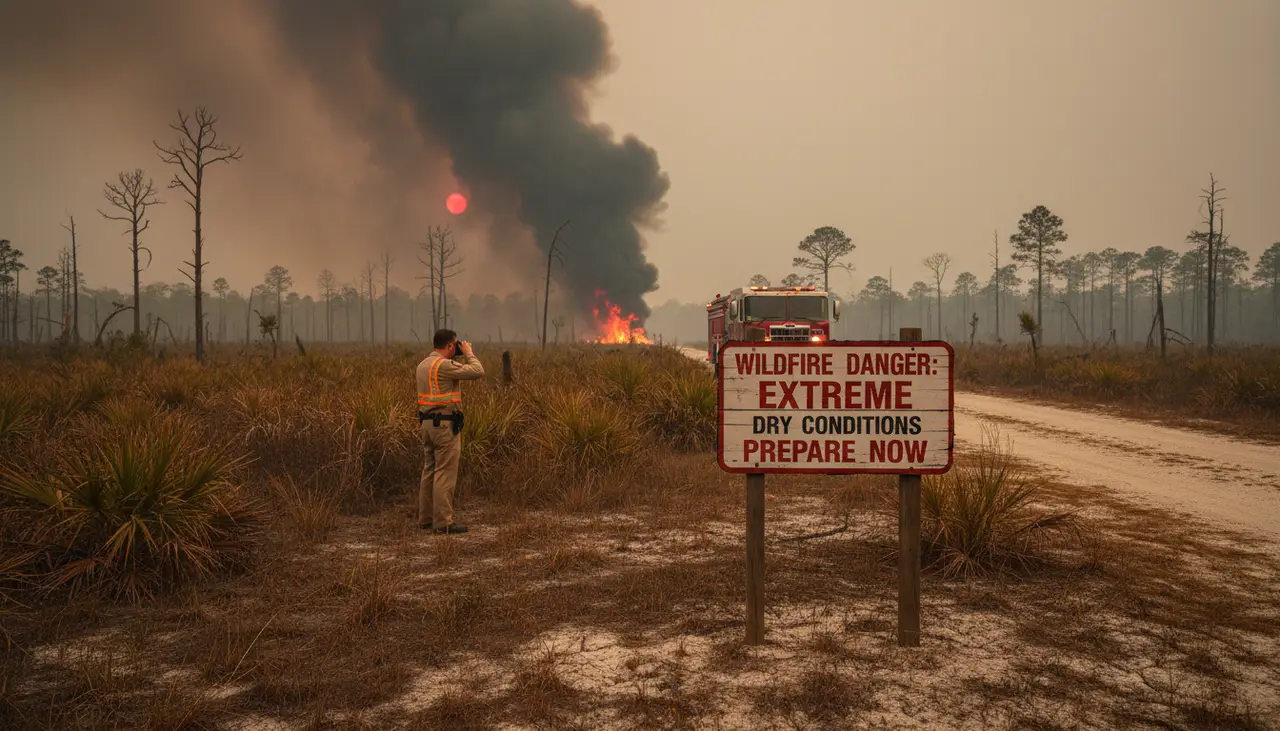
It was just after 6 p.m. on a warm Monday when residents near the intersection of E. Memorial Blvd and N. Florida Avenue noticed a faint but growing haze drifting over the Lake Parker neighborhood. The dry air carried the smell of smoke, unusual for this time of year, as firefighters scrambled to contain a blaze ignited in the nearby swampy area. The fire, fueled by parched underbrush and debris left from past hurricanes, spread faster than many expected, forcing several families to prepare for possible evacuation.
Wildfires Surge Early Across Tampa Bay Area, Lakeland on Alert
Fire officials with the Florida Forest Service report a sharp increase in wildfire activity across the Tampa Bay area, including Lakeland, with incidents occurring far earlier than usual. Over the past week, crews responded to two fires on Thursday and Friday each, followed by six fires on both Sunday and Monday. Many of these fires have been larger and more aggressive than typical for this season.
Todd Chlanda, a spokesperson for the Florida Forest Service, warns the region is already seeing conditions reminiscent of 2011 — Florida’s last major fire season. “We are not seeing the precipitation that we need to help with these fires,” Chlanda said. “Vegetation is stressed and dry, and swamps that normally hold water are bone dry.”
The lack of tropical moisture last year, combined with hurricane debris that has not fully decomposed, has created a dangerous build-up of fire fuel. Pine needles, known as “one-hour fuels” because they dry and ignite quickly, along with larger branches or “thousand-hour fuels,” are now primed to catch fire with little provocation.
Why This Matters to Lakeland Residents: Safety and Disruption Loom
For families living near areas like Lake Parker, Kathleen, and neighborhoods around E. Memorial Blvd and Florida Avenue, the threat is immediate. Wildfires can quickly cut off access to main roads, including Memorial Blvd and nearby US Highway 98, creating traffic snarls and delaying emergency services.
Homes near wooded areas and swamps face the risk of damage or total loss. Insurance claims from fire damage can be costly and time-consuming, leaving households under financial strain. Even if your property is spared, the stress of evacuation notices, smoke inhalation risks, and potential power outages can disrupt daily life.
Local schools such as Lakeland High School and institutions like the Polk County Fire Rescue have already begun adjusting schedules and readiness plans to cope with the increased fire danger. This is not a distant threat — it affects your commute, your children’s safety, and your property’s security.
If a Wildfire Threatens Your Home: What You Must Do Now
- Step 1: Stay alert to local news and emergency alerts about fires in your area, especially around E. Memorial Blvd, Kathleen, and Lakeland neighborhoods near Lake Parker.
- Step 2: Prepare an evacuation plan with your family. Know at least two routes out of your neighborhood, such as via Florida Avenue or US Highway 98.
- Step 3: Remove all pine needles, dry leaves, and brush from around your home and yard. Focus on clearing debris within 30 feet of your house.
- Step 4: Avoid outdoor burning or using equipment that can create sparks, especially in tall grass or wooded areas.
- Step 5: If you see smoke or fire, call 911 immediately. Do not attempt to fight the fire yourself unless it is very small and manageable.
- Step 6: If evacuation orders are issued, leave promptly. Do not wait until roads are congested or fire is at your doorstep.
- Step 7: Keep important documents, medications, and emergency supplies ready to go in case you must leave quickly.
When to Call in Professional Help
Wildfire damage can be devastating and complex. If your home or property sustains fire or smoke damage, you need to contact professional remediation and repair services immediately. Attempting to clean or rebuild without expert help can risk structural safety and lead to costly mistakes.
If your property is threatened or damaged, consulting with contractors experienced in fire restoration is essential. They can assess damage, secure your home, and begin repairs properly.
Legal assistance becomes necessary if you face disputes with insurance companies over claims or if your property is affected by fire caused by negligence elsewhere. A local attorney familiar with Florida fire laws can help protect your rights.
For long-term planning, homeowners in fire-prone areas should consider consulting land planners or fire mitigation experts to reduce future risks. This includes creating defensible space, managing vegetation, and understanding local burn regulations.
Back to Lakeland: A City on the Frontline of Fire Risk
Residents near Lake Parker, Kathleen, and along E. Memorial Blvd live daily with this heightened risk. Many drive through these areas on their commute, pass by Polk State College, or take children to local schools. The dry swamps and parched pine forests that border these neighborhoods are tinderboxes waiting for a spark.
With the forecast predicting above-average wildfire activity through May, the window to act is closing. Ignoring early signs of fire risk will only increase the potential for loss, damage, and disruption.
Where This Is Happening in Tampa
The wildfire concerns are focused around key locations in Lakeland and the greater Tampa Bay area. Streets such as E. Memorial Blvd and N. Florida Avenue are critical corridors near fire-prone neighborhoods like Lake Parker and Kathleen. These areas include residential zones adjacent to natural wetlands and forests that have dried significantly.
Landmarks like Lake Parker itself and institutions such as Polk State College place many residents and students in proximity to these risks. Locals use these routes daily for work, school, and errands, making awareness and preparedness essential.
Nearby highways, including US Highway 98, serve as main evacuation routes but can quickly become congested during fire emergencies, adding urgency to early preparation and response.