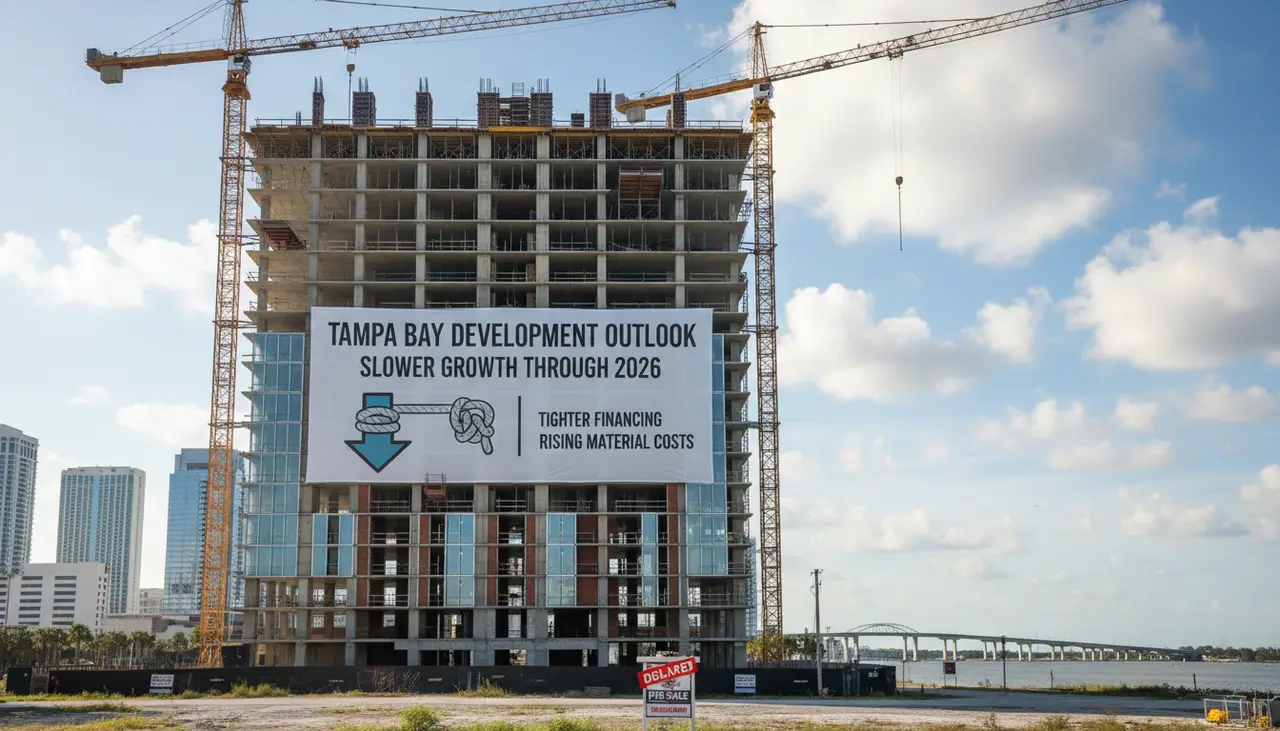
Morning Congestion at Franklin Street and Platt Avenue Highlights Growing Construction Delays in West Tampa
It’s 7:30 a.m. on a Tuesday at the busy intersection of Franklin Street and Platt Avenue in the West Tampa neighborhood. Commuters inch forward in stop-and-go traffic, their frustration palpable as construction crews work on a nearby redevelopment project. The noise of jackhammers and heavy machinery fills the air, while orange cones and barricades narrow the usual traffic lanes. For many residents here, this scene is becoming all too familiar—and it’s only expected to get worse.
What’s Driving These Changes in Tampa’s Development Landscape?
Recent data from Tampa Bay’s architectural sector reveals a shift in the local construction economy heading into 2026. While 55% of the 92 surveyed architects expect demand for architectural services to increase next year, this is down from 66% in 2025 and 64% in 2024. This decline signals caution among professionals despite a still-positive outlook, with 70% rating the development-related economy as “excellent” or “good” this year, compared to 80% in the previous two years.
One major factor behind these changing dynamics is the impact of higher interest rates. Rates rose sharply from 4-5% to 7-8%, though they are now rolling back to about 6%. This increase has negatively affected 40% of architects, a significant drop from 79% last year, suggesting some relief but ongoing challenges. The higher rates have forced 64% of architects to cut costs, up from 40% last year. Additionally, tariffs are pushing up overall project costs, with 69% of architects anticipating further increases.
Local voices underline these trends. Chris Kirschner, president of BDG Architects in Tampa, confirms the cautious optimism but warns that rising costs are reshaping project timelines and scopes. Larry Silvestri, a local real estate attorney, points out that these financial pressures are already complicating property deals and development agreements. Meanwhile, Matt Fetterhoff, vice president with Phillips Heavy, Inc., notes that contractors are facing tighter budgets and longer lead times for materials.
Pinellas County’s focus on redevelopment due to environmental challenges also plays a role, emphasizing the need for careful planning and regulatory compliance that adds layers of complexity to local projects.
Why This Matters to Tampa Residents
If you live or work near active construction zones like West Tampa or Pinellas County, these economic shifts have immediate consequences. Increased project costs and tighter budgets mean delays and potential cutbacks in development quality. Traffic disruptions like those at Franklin and Platt will likely intensify, extending commute times and increasing stress for daily travelers.
For homeowners and renters, rising costs can translate into more expensive housing developments or renovations, slowing down availability of new units and potentially pushing prices higher. If you own property near redevelopment areas, you might face prolonged construction noise, limited access, or even safety hazards if projects stall or contractors cut corners.
On the legal side, the pressure on developers and buyers increases risks of contract disputes, delays, and unexpected fees. Real estate transactions might become more complicated as financing tightens and timelines stretch.
If You’re Facing Construction or Development Issues: What To Do Now
- Document all disruptions carefully, including dates, times, and specific impacts on your property or daily routine.
- Communicate promptly with your property manager, homeowner’s association, or local construction project contacts to report issues.
- Review any contracts or agreements related to your property or planned construction with an eye on timelines and cost obligations.
- Stay informed about local construction schedules by checking updates from city planning offices or neighborhood associations.
- Monitor your commute routes and plan alternative paths to avoid prolonged traffic delays.
- If you notice safety hazards such as unsecured work zones or damaged infrastructure, report them immediately to city authorities.
- Keep receipts and records of any additional expenses incurred due to construction delays or disruptions.
When You Need Professional Help
At some point, DIY efforts won’t be enough. If construction delays or cost overruns threaten your housing plans or property value, you need to contact a real estate attorney. Professionals like Larry Silvestri can help navigate contract disputes, renegotiations, or legal claims related to development delays.
If your property suffers damage due to nearby construction or if you face safety hazards, contact licensed repair services immediately. Delaying repairs can worsen damage and increase costs.
For those planning new construction or renovations, working with experienced architects and planners is essential to manage rising costs and regulatory hurdles. Chris Kirschner’s insights highlight the need for expert guidance to keep projects on track.
Contractors like Phillips Heavy, Inc., represented by Matt Fetterhoff, emphasize the importance of hiring reputable firms that understand current market challenges and can provide realistic timelines and budgets.
Local Context: What Residents Should Watch For
West Tampa’s busy intersections like Franklin Street and Platt Avenue are just one example of how economic shifts in architecture and construction ripple through daily life. Whether you’re commuting, managing property, or planning renovations, the current environment demands vigilance.
With interest rates stabilizing but still higher than recent years, and tariffs pushing costs up, Tampa’s development scene is entering a period of uncertainty. Residents will encounter these challenges in neighborhoods undergoing redevelopment, including parts of Pinellas County with their unique environmental constraints.
Ignoring these warning signs risks prolonged inconvenience, financial loss, and legal complications. Tampa households need to stay informed and act decisively.
Where This Is Happening in Tampa
The intersection of Franklin Street and Platt Avenue in West Tampa is a hub for ongoing construction activity affecting daily commuters and local businesses. Nearby neighborhoods, including Seminole Heights and parts of North Hyde Park, also experience ripple effects from these projects.
Residents traveling through these areas use major arteries like Hillsborough Avenue and Nebraska Avenue, where redevelopment projects often intersect with traffic flow. Landmarks such as the West Tampa Library and local schools are within reach of these zones, meaning families and workers regularly pass through or near construction sites.
Pinellas County’s redevelopment efforts, influenced by environmental challenges, affect areas around Clearwater and St. Petersburg, where residents face similar pressures from rising costs and project delays.