Evening Tension at 15th Street and Nebraska Avenue in Seminole Heights
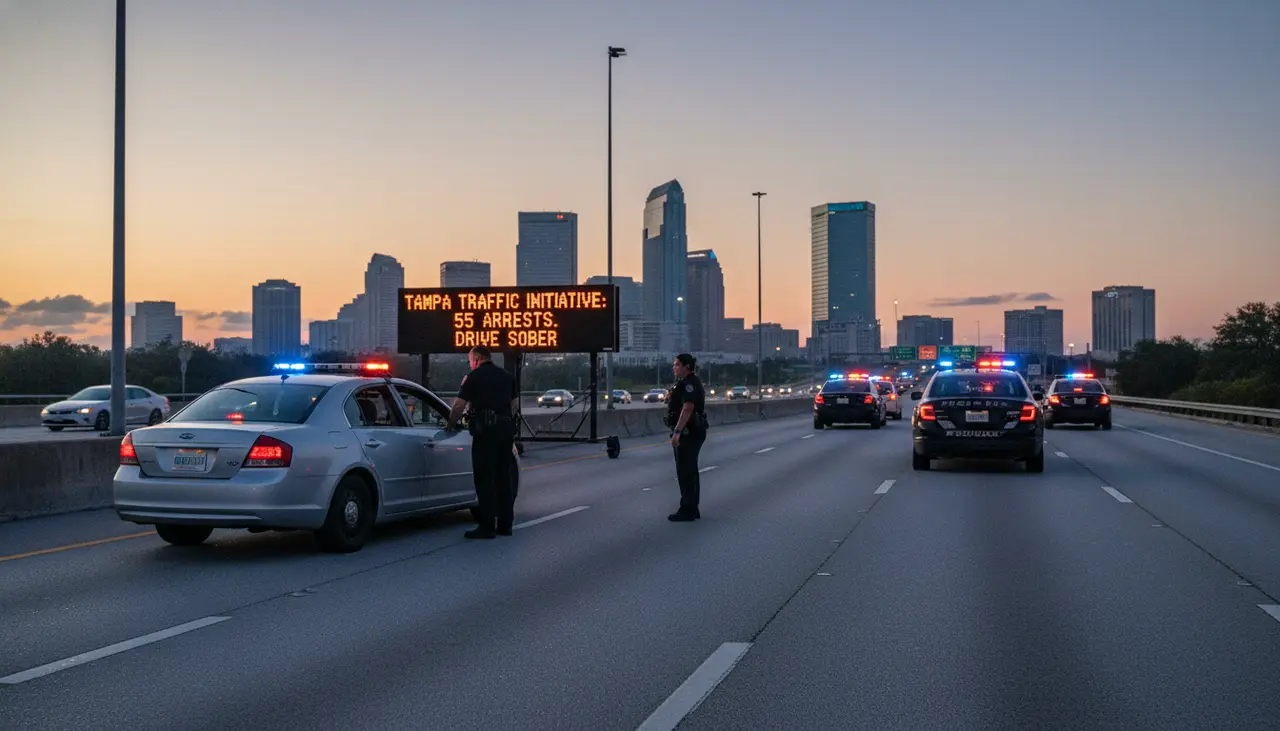
It was just past 7 p.m. on a humid Thursday evening when a cluster of police cars converged near the intersection of 15th Street and Nebraska Avenue, one of Seminole Heights’ busiest crossroads. Residents walking home from local shops and families driving through the neighborhood suddenly found themselves caught in a police operation that was anything but routine. Flashing red and blue lights lit up the storefronts along Nebraska Avenue, and the usual hum of evening traffic was replaced by the sharp commands of law enforcement officers.
For three months, this scene repeated itself across Tampa, especially in neighborhoods like Seminole Heights and East Tampa, as part of a targeted crackdown known as “Operation: Safer Streets.” The initiative, led by the Tampa Police Department in partnership with the Drug Enforcement Administration (DEA), the State Attorney’s Office, and the United States Attorney’s Office for the Middle District of Florida, focused on chronic offenders known to fuel the city’s drug markets.
What Happened: 55 Arrests and Dangerous Drugs Off the Streets
According to Tampa Police Chief Lee Bercaw, the operation resulted in 55 arrests over the course of three months. The sweep targeted drug dealers responsible for flooding neighborhoods with narcotics, including fentanyl, cocaine, and other illegal substances. Officers also recovered a firearm during the raids, underscoring the real threat of violence tied to these drug networks.
“It’s traumatic for families to see drugs sold in their parks and neighborhoods,” Chief Bercaw said. “The result of this operation and arrests of these 55 drug dealers clearly disrupted the availability of illegal narcotics in our community.”
DEA Tampa District Office Assistant Special Agent in Charge Todd Cavaliere emphasized the broader goal behind the local enforcement. “Operation Safe Streets was a joint collaboration between Tampa Police Department and Drug Enforcement Administration,” Cavaliere said. “The goal was to clean up Tampa streets and be free from drug distribution and violence that inevitably accompanies drug markets.”
He added, “Tampa citizens can be assured law enforcement will work together to make their communities safe. DEA is committed to stopping the importation and distribution of narcotics in the United States and continues to push for a Fentanyl Free America.”
Why This Matters to Tampa Residents
For families living near Nebraska Avenue or commuting through East Tampa, these arrests are not just numbers—they are a direct response to the daily risks they face. When drug dealers operate openly, residents deal with more than just crime statistics. They face real consequences:
- Safety risks: The presence of firearms and violent drug markets increases the chance of drive-by shootings, robberies, and assaults in neighborhoods like Seminole Heights.
- Property values: Homes near persistent drug activity lose value, making it harder for families to sell or refinance.
- Stress and fear: Parents worry about their children’s safety walking to local schools such as Memorial Middle School on 22nd Street, and residents avoid parks and public spaces where drug deals occur.
- Traffic disruptions: Police operations and drug-related violence can cause road closures or heavy police presence, especially on key corridors like 22nd Street and Nebraska Avenue, delaying commutes and emergency services.
Ignoring these issues is not an option. If drug activity persists in your neighborhood, your household’s safety and financial stability are at risk.
If You Encounter Drug Activity: What to Do Immediately
If you witness drug deals, suspicious behavior, or violence in your area, follow these steps without delay:
- 1. Stay safe: Do not confront anyone involved. Keep a safe distance and avoid drawing attention.
- 2. Document details: Note exact locations, times, descriptions of individuals or vehicles without putting yourself at risk.
- 3. Report to police: Call Tampa Police Department’s non-emergency number or Crime Stoppers at 1-888-873-TIPS immediately.
- 4. Alert neighbors: Share information with trusted neighbors or neighborhood associations to increase community vigilance.
- 5. Secure your home: Check locks, install security cameras if possible, and keep outdoor lighting on to deter illegal activity near your property.
- 6. Avoid shortcuts: Refrain from using isolated streets or parks known for drug activity, especially at night.
- 7. Follow up: Stay informed about police updates and community meetings addressing local crime.
When Professional Help Becomes Necessary
Some situations require more than personal vigilance. You need to contact professionals when:
- Your property is damaged: If drug activity leads to vandalism, broken windows, or graffiti, contact a licensed contractor immediately to secure your home and prevent further damage.
- You face legal complications: If you or a family member is implicated in drug-related charges or need legal advice about neighborhood safety issues, you must consult a criminal defense attorney familiar with Tampa’s courts.
- Your neighborhood needs planning solutions: Persistent drug problems often require urban planning interventions. Reach out to local planners or community development professionals to advocate for better lighting, traffic calming measures, or park renovations.
- Home security upgrades: For ongoing safety, hire professional repair services to install or upgrade security systems, including cameras and reinforced locks.
Delaying these steps can leave your household vulnerable and make recovery more difficult if a crime occurs.
Local Context: A City on Alert
Operation: Safer Streets is not a one-time crackdown but part of a sustained effort to reclaim Tampa’s neighborhoods from the grip of drug dealers. Residents near landmarks such as the Tampa Riverwalk or the University of South Florida campus have reported increased police presence and community patrols.
Many Tampa residents pass through these affected areas daily—whether driving along Nebraska Avenue to work, walking through Seminole Heights to local shops on Central Avenue, or dropping kids off at Memorial Middle School. The visibility of this operation serves as a reminder: drug activity isn’t confined to distant parts of the city. It’s happening on streets you know, near homes like yours.
Ignoring the risks won’t make them disappear. Tampa’s safety depends on every resident’s awareness and action.
Where This Is Happening in Tampa
The core of Operation: Safer Streets focused heavily on neighborhoods like Seminole Heights and East Tampa. Key streets include Nebraska Avenue, 15th Street, and 22nd Street—arteries that connect residential areas to commercial corridors. These streets are frequently traveled by locals heading to landmarks like Memorial Middle School and the University of South Florida’s nearby campuses.
Seminole Heights, known for its historic homes and growing small business community, has seen a rise in police activity along Nebraska Avenue, a main commercial strip. East Tampa, with its mix of residential blocks and industrial zones, faces challenges along 22nd Street, where drug dealers have operated near public parks and community centers.
Commuters and families navigating these areas must stay alert. The increased law enforcement presence is a response to real threats, but it also signals ongoing challenges that affect daily life—from traffic delays to neighborhood safety concerns.